About
She sings, plays and writes
Fado singer, viola de fado player and lyricist. From Alverca to whichever stages call for her.
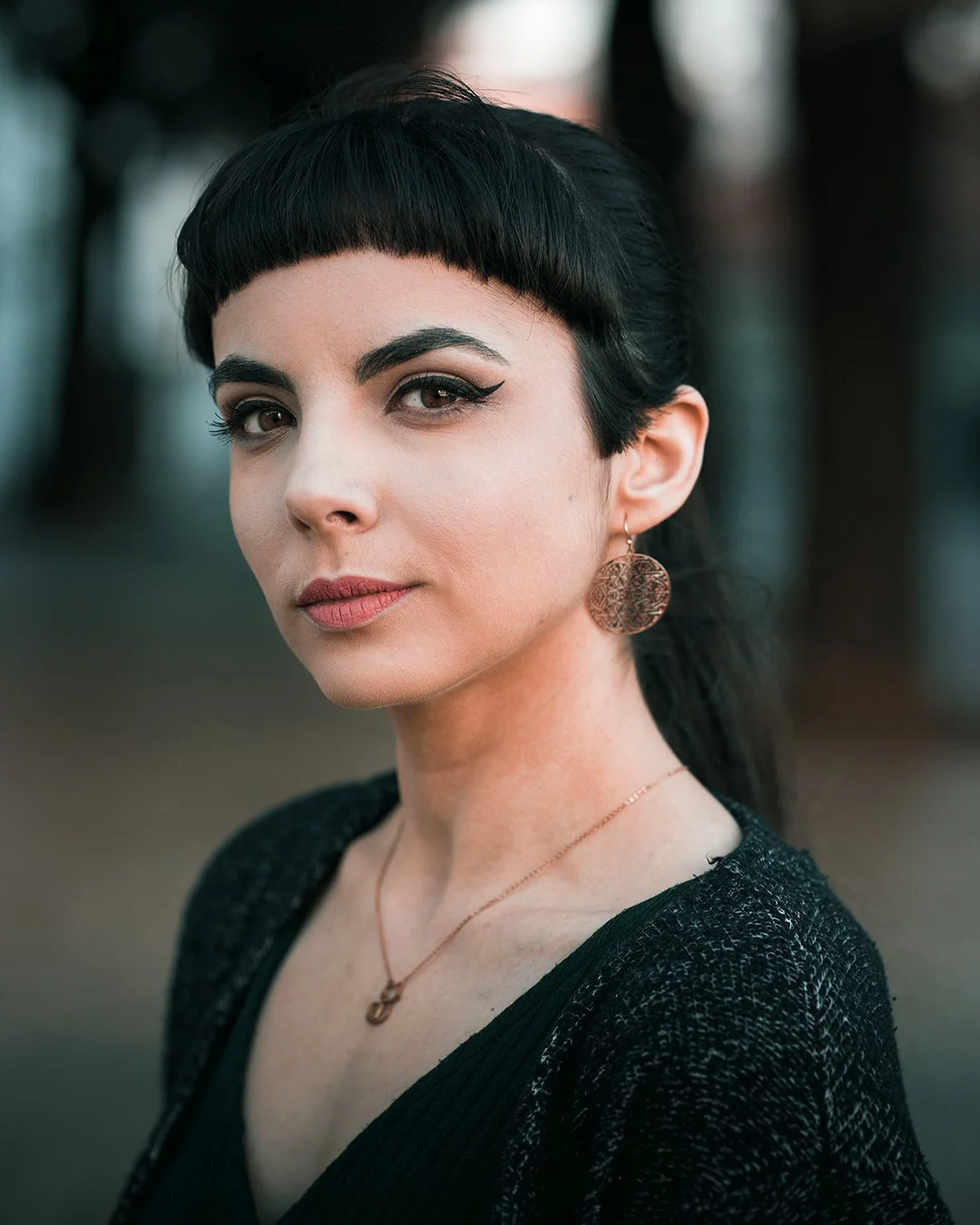
Fado singer, viola de fado player and lyricist. One of the few women who play the viola de fado professionally; she writes her own lyrics and lyrics for other fado singers.
She won the Grande Noite do Fado in 2004, still a teenager, and the O Meu Fado competition, on Rádio SIM, in 2019, with a lyric of her own. She graduated in Musicology from NOVA University Lisbon and in Voice from the Lisbon School of Music, in the class of the tenor Luís Madureira. It is this double training, fado and classical singing, that defines her artistic identity.
She founded As Mariquinhas, an all-female fado group, and with the Portuguese guitar player Fernanda Maciel forms one of the first currently active all-female Portuguese guitar and viola de fado duos. She is also a curator and programmer: she curated and programmed Povo Lisboa, in Cais do Sodré, a house of artistic residencies that shaped the path of some of the voices that matter in fado today, hers among them.
She recorded the album Marta Rosa (Discos do Povo, 2014), following an artistic residency at Povo Lisboa, and the EP Entretanto (Universal Music Portugal, 2020), with two originals of her own. She is currently preparing a new album.
In July 2026 she made her debut on the main stage at Tomorrowland, in Belgium, as one of the voices of the Mainstage show, singing also with the Symphony of Unity, the festival’s orchestra, on the Freedom stage and at the Love Tomorrow Summit.
Official biography, November 2026.
The road so far
Year by year
- 2001Begins studying music, at ten.
- 2003Makes her public debut, at a fado night.
- 2004At thirteen, first youth prize at the Grande Noite do Fado de Lisboa, at the Teatro Municipal São Luiz, on 20 November.
- 2007Enters the Silva Marques Conservatory in Alhandra and studies voice with mezzo-soprano Susana Teixeira. That is where she falls in love with classical singing.
- 2009Awarded the “Silva Marques” prize by the conservatory.
- 2010Second prize for the “Maria Severa” award at Há Fado na Mouraria, at the final gala in the Teatro da Trindade, on 1 December. She sings a lyric of her own for the first time, “Metro”, her own quatrains set to Fado Menor do Porto — a love story between two women, a bold subject in a conservative world.
- 2013Graduates in Musicology from NOVA University Lisbon.
- 2014Selected for the artistic residencies at Povo, in Cais do Sodré, from which comes her first record, “Marta Rosa” (Discos do Povo, Vol. 16) — she chooses every lyric, the guest musicians and the running order, and writes some of the arrangements. The same year she picks up the viola de fado, self-taught, at the urging of the students she was teaching in Vila Franca de Xira.
- 2016Graduates in Voice from the Lisbon School of Music, in the class of the tenor Luís Madureira, with 19 out of 20 in her final exam. Sings Donna Anna in “Don Giovanni” at Auditório Vianna da Mota, Cine-Teatro da Chamusca and São Luiz. First trip abroad: the 14th Castilla y León Fado Festival, in Zamora.
- 2017Cultural Merit Award of the City of Alverca, at twenty-six.
- 2019First prize at O Meu Fado (Rádio SIM) with one of her own lyrics, “Lenda da Sereia” — the prize included recording an EP. Founds “As Mariquinhas”, an all-female fado group, with Fernanda Maciel, Cláudia Leal and later Mara Dulce. Returns to Zamora for the festival’s 17th edition.
- 2020The EP “Entretanto” comes out on Universal Music Portugal, co-produced by her and Diogo de Castro Ferreira. As Mariquinhas ends when the pandemic begins.
- 2021Releases “Vai do Vírus” independently, a single and music video made at home — a parody built on “Contigo fica o engano”, by Amália Rodrigues and Carlos Gonçalves.
- 2023She sings in “Heimlich seufzen die Winde”, at the Klosterkirche Königsfelden, in Windisch, Switzerland: a creation by the choreographer Filipe Portugal for ten dancers, with guitar and a string quintet, on stage from 24 May to 18 June. The title is a line by Ricardo Reis. It is there that she stretches her voice end to end, from fado to classical.
- 2024Returns to Povo, now coordinating the artistic residencies and accompanying on the viola de fado, and brings Fernanda Maciel onto the team — Povo becomes the first venue with a resident all-female duo. Célia Leiria records “Não digas que sou tua” and Sofia Ramos “O Fado”: two of her lyrics, in other singers’ voices.
- 2025A fado series at MACAM, in Lisbon, with Fernanda Maciel and Miguel Silva. More singers start asking her to write for them.
- 2026In May, Filipa Biscaia records “Marcha Lisboa Tua e Minha”, one of her lyrics, on the album “Antes Que Os Rios Sequem”; in June, Silvana Peres records “O Espelho”, on the album “A Todas as Mulheres”. The Tomorrowland producer found her online and sought her out. In July, seventeen performances in ten days at Tomorrowland, on the Mainstage and with Symphony of Unity. In September she takes the Symphony to Tenerife and the Arena di Verona. She is working on a new album.
Next
The records are in the discography, with the lyrics where there is an English translation. The videos, year by year, are on the videos page.
Booking and press
Biography, photographs and the press release are in the press kit.